Showing posts with label books. Show all posts

Sunday, July 19, 2015

Another favorite SF Author: John Scalzi

This guy:


... is prolific SF author John Scalzi, recently rewarded with a $3.4 million contract  and whose catalog of SF novels is one of the more inventive and enjoyable that I've experienced.

The first one I read (and just finished rereading 5 minutes ago) is one of my favorites of all time:


Any plot synopsis fails to capture it, but it consists of Washington power politics in an era of interstellar inter-species diplomacy and trade ... and sometimes war. One of the veterans of one of the wars is the protagonist Harry Creek ... the dialogue is sparkling, the characters vivid.

Don't hesitate!

Almost as good and set in the same sort of era where Earth is known by several different alien species:


... in this series the technology exists to make 75-year-olds into 22-year-olds with enhanced bodies (staying in top shape with no exercise) and blood (carrying more oxygen than normal blood) and even a BrainPal, an integrated computer in the brain that has all sorts of advantages ....

The series so far:


  • Old Man's War (2005)
  • The Ghost Brigades (2006)
  • The Last Colony (2007)
  • Zoe's Tale (2008)
  • The Human Division (serial then collected into a novel 2013)
It's particularly important to read the first book in this series first, as I started with The Ghost Brigades and missed some things until I went back and restarted with Old Man's War.

Others of his:

  • Agent to the Stars (1997 shareware, 2005 published "for real")
  • Fuzzy Nation (2011 "reboot" of H. Beam Piper's 1962 Little Fuzzy)
  • Lock In (2014)
I've "read" (mostly via audiobook) almost all of these and enjoyed all, some fervently.

Try any of these but be prepared: Scalzi got the $3.4 million contract because many readers went back to collect the entire list after reading one!

Scalzi also has a blog ...


Sunday, July 20, 2014

A virtual war over virtual hells

I just finished my favorite work of SF since Charles Stross' Singularity Sky.

Iain M. Banks was also a Scot, like Stross; Banks died in 2013. He produced 9 books in a "Culture series" about an advanced civilization, the Culture where AI-run ships and drones have achieved full sentience and are granted equal citizenship and rights.

The first four chapters are just setting up the main characters, so do give it at least until chapter 5.

The protagonist is Lededje, an "Intagliate" who was tattooed at birth right down to her DNA. This marked her as the property of Joiler Veppers, the richest and most powerful man of the Enablement, a less technically and politically (and morallly!) advanced civilization than the Culture.

I won't spoil the story by giving details on how Lededje gets away from Veppers and into dealing with the Culture. But the basis of the story runs several complex threads around a war that several civilizations have agreed to fight only in a virtual environment (like a computer game) to decide the fates of several Hells. These Hells are also running as virtual environments, and the technology exists to transfer the consciousness at death from the body of an unfortunate into one of these Hells.

The complexity of the story threads and the way Banks brought them all together with their interplay with the Culture ships (notables of these named Sense Amid Madness, Wit Among Folly and Falling Outside the Normal Moral Constraints) is just dazzling. There's also quite a bit of discussion of the sociology and political interplay between the Culture and several other intergalactic civilizations that exist at the same time and several of which are competing in the War Over Hell.

Five stars! You may want to read one previous Culture novel to get your bearings; I'd recommend The Player of Games if you want to read one before this one.

I experienced this as an Audible audiobook, which is the way I "read" almost all fiction these days.


Thursday, April 3, 2014

Recent recommended SF & Fantasy

I have been mostly "audiobooking" fiction for the past few years, and
the books listed here are no exception. Here's the roundup.


I had never before tried Child, but Nancy Pearl recommended "anything by Lee Child" and I greatly enjoyed it. Child is an MP in the U.S. Army in this story set in 1989-1990 when the Berlin Wall was crumbling ... and strange things were going on in the army. Reacher is violent and possibly amoral, but a very enjoyable character. Five stars and I'm just going back into the Reacher pile for another one shortly.

Another violent story that I enjoyed:


This is the first book on the "culture war" between two future starfaring civilizations: the culture (hedonistic, AI-loving) and the Idrians, an expanding tri-pedal warlike world. The protagonist is Horza, a "changer" working for the Idrians. He was a bit hard to get to like, but the closing parts of the book were so fast-paced and plotted that I got a bang out of anyway. Four stars and I'm planning to continue with the series.

Next, a well done near-future Mars mission gone wrong:

This was an enjoyable tale that focuses on Mark Watney, who's been accidentally left on Mars when the rest of his crew escape during a storm. He turns out to be not only alive but resilient enough to start planning to survive until the next mission ... four stars!

Finally one from the seventies:


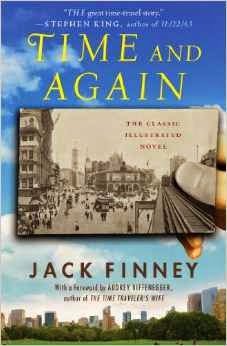
This is a time-travel story set in the 1970's ... and in 1882. The time travel "technology" in use is so dumb it almost made me give up on the book ... but I'm glad I stayed. The author romanticizes 1882 way too much, but there's enough plot and tragedy and conflict to keep anyone interested. Five stars despite my quibbles!

Tuesday, October 30, 2012

Why do we allow a storm to bring the market down?

Since the rise of electronic trading, the stock and related markets seem to me to be nearly identical to other network services. Amazon.com and Google do not allow a single weather event or earthquake or whatever to disrupt normal operations.

The standard way of doing this is to set up distributed data centers in geographically stable but widely separated places. Why can't we have this for our markets as well?

 I speculate that it may be the illusion that the fading market makers have that their personal involvement is required for the functioning of the markets. One official was quoted "we could have opened the electronic trading markets but didn't want to endanger our employees who have to be present to run it." Clearly if you have one data center in New Jersey, one in Chicago, one in Seattle and one in Hawaii this won't happen.

Yes, you will lose the femtosecond response you're getting from being right next to the New York data center, but so will everyone else. Until power is restored, anyway. (I enjoyed Scott Patterson's book Dark Pools on the rise of electronic trading, which got me thinking about this.)


Comments please!

Thursday, October 11, 2012

Favorite Recent Fiction: Charles Stross

I promised a while ago now to add recommended fiction in the wake of the nonfiction list I posted. I couldn't bring myself to mash all my favorites together so I am going to take them author by author.


First up is Charles Stross, who's produced three of my favorite recent titles:


Singularity Sky: This one is a space opera with an unusual blend: a clashing of cultures (libertarian from Earth vs. neo-Soviet style New Republic), a clash of nature vs humans, nature having produced the Eschaton, which has distributed humans across the cosmos and left an obelisk on each world warning humans not to mess with the timeline ... and of course a love story. This one just floored me, even my second time through it. But some people I've recommended it to put it down, probably too soon. If you have trouble with the early sections please do hang with it until Rachel appears and you'll be rewarded.

Iron Sunrise is the sequel to Singularity Sky and enjoyable, but didn't grab me as intensely as the others I mention here.


Halting State: since I'm an (often) contract computer programmer, the prologue captured me. It's a fake email to 'Nigel McDonald' about a job offer for him and purports to be from an AI that knows "you'll never be promoted because your slimy boss is boffing that cute colleague of yours" etc., etc.

After that it tells the story of a very strange crime that occurs inside a computer game. Somebody at the game company calls the local (Edinburgh) cops and Sue, the local 'heterosexually challenged' sergeant responds. Elaine is a fraud investigator for the insurance company, Jack a ... contract computer programmer hired by Elaine's company for technical assistance in getting to the bottom of things.

The story is told in second person from the point of these three characters, and I found it just riveting! It's a mystery/thriller with extra plot elements (a game called Spooks that turns out to be not really just a game, backstories for all three characters that resonate ..) ... I "couldn't put it down" (though I experienced it as an audiobook, described elsewhere in this blog ...)


Rule 34: This is the sequel to Halting State, bringing back Sue and her boss Liz and some other minor characters from that book. Also added is Anwar, a petty criminal and schemer whose schemes go consistently awry, and the Toymaker, a psychopathic employee of a global shadowy corporation who has discovered ... that psychopaths make good operatives. This one is darker, more violent, sick in places ... and I just loved it! Not for the squeamish, though.

I have read one other of Stross's books, Accelerando, which tells me that I should stick with the audiobook format for fiction. I first read this book, since there was no audiobook yet ... and it didn't much grab me. In fact I didn't really remember much of it after a year. But recently the audiobook was released and I tried it and wow! It's still not quite as compelling for me as the three favorites liste above, but I just skim so much in reading and get to / have to sit and pay attention to the audiobook that I got so much more out of in this format!

Once again, audible.com is the place for audiobooks!

Next up: Lois McMaster Bujold (and Miles Vorkosigan!)


Sunday, September 16, 2012

Outstanding Nonfiction 2012 (and a few older)

Here are a batch of the best nonfiction I've read recently (as well as a few from previous years).

Five stars = 'stunning, not to be missed'; four stars = 'excellent.'

Enjoy!

TitleAuthorStarsComment
The Wild Life Of Our BodiesRob Dunn*****Therapeutic use of hookworms, vertical farming, much more
The Righteous Mind: Why Good People are Divided by Politics and ReligionJohnathan Haidt*****Genetic differences in Liberals and Conservatives, much more
Thinking, Fast and SlowDaniel Kahnemann*****How we mostly use heuristics for thinking and what to do when they don't work
Predictably IrrationalDan Ariely****The power of Free to befuddle us, among many other things
Too Big to FailAndrew Ross Sorkin*****The Financial Crisis as a page-turner (and later an HBO movie)
Debunking EconomicsSteve Keen*****See my full post on this one here.
Lords of Finance: The Bankers Who Broke the WorldLiaquat Ahamed ****The guys in charge the last time this happened (they didn't do as well)
All the Devils are Here: The Hidden History of the Financial CrisisBethany McLean and Joe Nocera*****Smart guys (Goldman Sachs) and dumb guys (Merrill Lynch) during the financial meltdown
The Smartest Guys in the RoomBethany McLean and Peter Elkind*****Enron and its amazing hubris and wild cast of characters
Paper Promises: Debt, Money and the New World OrderPhilip Coggan****The history of financial crises past, and it's a long one
Fooled by Randomness: The Hidden Role of Chance in Life and in the Markets Nassim Nicholas Taleb ***** If you're so rich, why aren't you smart?
The Black Swan: The Impact of the Highly Improbable Nassim Nicholas Taleb ***** ... like a decline in housing prices ...
Fringeology Steve Vulk **** If we can't explain it, what do we say to ourselves?

Friday, February 15, 2008

A note on audiobooks and Catherine Asaro

I had started to post this list of books for my friend Jeffy a few months back but got distracted and didn't get it done.

I have been audiobooking (mostly via Audible and Ipod) for a couple of years now. I always thought that since I'm such a reader I wouldn't get much out of listening to a book being read.

Instead I find that it's a different experience, and valuable in that I find myself
willing to audiobook books that I never get around to reading. Also I find that I
respond more emotionally to audiobooks than to reading the same book. I thus speculated that if I responded to an audiobook it would be likely that my Lovely Wife Kate would enjoy reading the book. And it has worked out that way.

I came across Catherine Asaro in going through Nebula winners. I started with her Primary Inversion and progressed through other "Skolian Empire" works The Radiant Seas, The Last Hawk, Ascendant Sun, and The Quantum Rose (which won the 2001 Nebula), all in audiobook form, and I enjoyed all of them.

I bought Kate these for Christmas (2007) and she's been devouring them. Success!

I also enjoyed audiobooking another Nebula winner, Greg Bear's Darwin's Radio, and reading its sequel Darwin's Children. The two books are on Kate's stack to try next. I'm not sure she'll like them as much as she's liked Asaro, but I'm hopeful.

You've no doubt noticed that I use 'audiobook' as a verb. I just don't see another way to do it ... I "listened to" that book? That doesn't capture it!